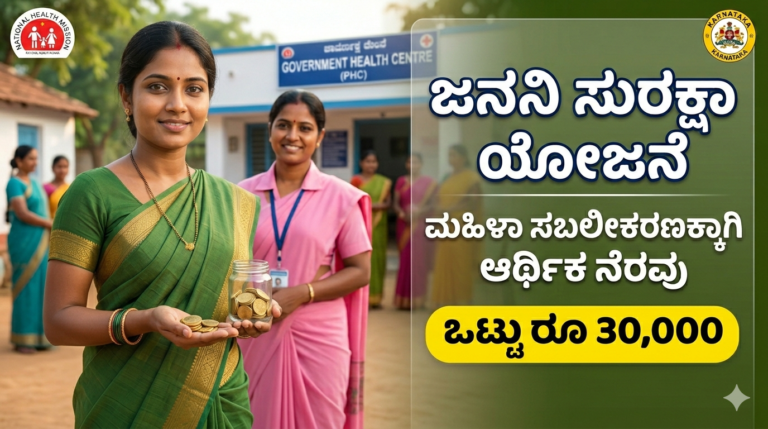
Janani Suraksha Yojana (JSY) 2024-25: Financial Assistance and Benefits for Pregnant Women
The health and well-being of a mother and her newborn are the foundation of a healthy society. In India, maternal and neonatal mortality rates have historically been a concern, especially in rural and economically backward areas. To address this, the Government of India launched the Janani Suraksha Yojana (JSY) under the National Health Mission (NHM).
This scheme is a safe motherhood intervention that provides financial incentives to encourage institutional deliveries (hospital births) instead of home births. By ensuring that every child is born in a medical facility under professional supervision, the government aims to drastically reduce the risks associated with childbirth.
What is Janani Suraksha Yojana (JSY)?
Launched on April 12, 2005, JSY is a 100% centrally sponsored scheme. It integrates cash assistance with delivery and post-delivery care. The primary objective is to reduce maternal and infant mortality by promoting institutional delivery among poor pregnant women.
Key Objectives of the Scheme
- Promoting Institutional Delivery: Encouraging women to give birth in government or accredited private health facilities.
- Reducing Mortality Rates: Lowering the Maternal Mortality Ratio (MMR) and the Infant Mortality Rate (IMR).
- Providing Financial Support: Helping Below Poverty Line (BPL) families cover the costs associated with pregnancy and childbirth.
- Strengthening ASHA Network: Motivating Accredited Social Health Activists (ASHA) to track and support pregnant women.
Financial Assistance Details
The cash incentive varies depending on whether the mother resides in a Low Performing State (LPS) or a High Performing State (HPS), and whether she lives in a rural or urban area.
1. For Rural Areas:
- Mother’s Incentive: ₹1,400
- ASHA Incentive: ₹600 (includes ANC component and delivery facilitation)
- Total: ₹2,000
2. For Urban Areas:
- Mother’s Incentive: ₹1,000
- ASHA Incentive: ₹400
- Total: ₹1,400
3. For Home Deliveries:
BPL pregnant women who choose to deliver at home (aged 19 and above) are entitled to ₹500 per delivery to cover incidental expenses. However, the government strongly encourages institutional delivery for better safety.
Eligibility Criteria
To avail of the benefits under JSY, the following criteria must be met:
- Economic Status: The scheme primarily targets women from Below Poverty Line (BPL) families.
- Caste Categories: All pregnant women belonging to Scheduled Castes (SC) and Scheduled Tribes (ST) are eligible, even if they do not have a BPL card (in most states).
- Age Limit: The mother should ideally be 19 years of age or older.
- Facility: The delivery must take place in a Government health center (SC/PHC/CHC/District Hospital) or an accredited private hospital.
- Number of Children: In Low Performing States (LPS), the benefit is available for all births. In High Performing States (HPS), it is generally restricted to the first two live births.
Required Documents for Application
Keep the following documents ready to ensure a smooth application process:
- Aadhaar Card: For identity and DBT (Direct Benefit Transfer) purposes.
- BPL Ration Card: To prove eligibility for the financial incentive.
- JSY Card / Mother-Child Protection (MCP) Card: Issued during pregnancy registration.
- Bank Account Details: Passbook copy (must be linked with Aadhaar).
- Caste Certificate: For SC/ST applicants.
- Address Proof: Voter ID or Electricity bill.
- Delivery Certificate: Issued by the hospital after birth.
How to Apply for Janani Suraksha Yojana (JSY)?
The application process for JSY is designed to be simple and accessible through local health workers.
Step 1: Registration
Pregnant women should register themselves with the nearest Anganwadi center or Sub-Health Center (SHC) as soon as the pregnancy is confirmed.
Step 2: Get the JSY/MCP Card
The Auxiliary Nurse Midwife (ANM) or ASHA worker will provide a JSY/MCP card. This card tracks antenatal checkups (ANC) and is mandatory to claim the cash benefit.
Step 3: Institutional Delivery
At the time of labor, the woman should be admitted to a government hospital or an accredited private facility. The ASHA worker usually assists in transportation and admission.
Step 4: Claiming the Money
The cash assistance is usually disbursed at the hospital itself before discharge or via Direct Benefit Transfer (DBT) to the mother’s bank account shortly after delivery.
Apply Link / Official Portal: You can find more details and track schemes on the official National Health Mission portal:
Or visit the MyScheme portal:
https://www.myscheme.gov.in/schemes/jsy
Role of ASHA Workers
The ASHA (Accredited Social Health Activist) is the backbone of this scheme. Her roles include:
- Identifying pregnant women in the community.
- Helping them register for the scheme.
- Ensuring at least three antenatal checkups (ANC).
- Arranging transport for delivery.
- Staying with the mother at the health center during delivery.
- Facilitating the BCG immunization for the newborn.
Conclusion
The Janani Suraksha Yojana is a lifeline for underprivileged families. It not only provides much-needed financial relief but also ensures that the miracle of birth happens in a safe, hygienic, and medically equipped environment. If you or someone you know is eligible, ensure registration happens within the first trimester to maximize the benefits of this noble initiative.