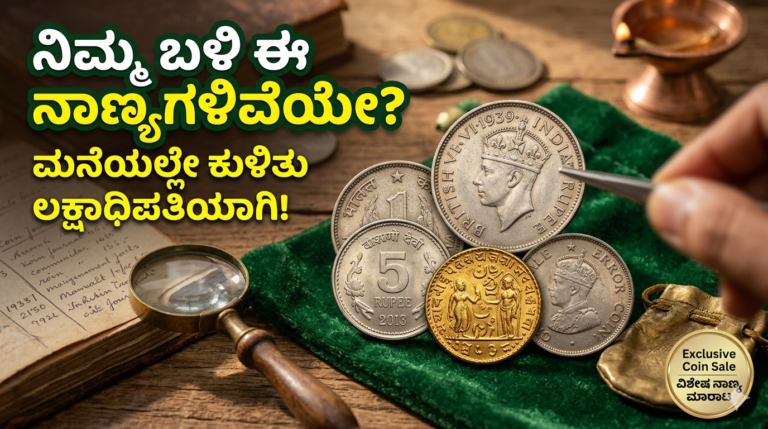
Unlock a Fortune: How Your Old Coin Collection Could Be Worth Millions
Do you have a dusty jar of old coins tucked away in an attic? Or perhaps you’ve inherited a small pouch of vintage currency from your grandparents? While they might look like mere metal scraps to the untrained eye, these relics could be your ticket to becoming a millionaire. In the global numismatic market, certain rare Indian and international coins are fetching prices upwards of ₹1 lakh to even ₹10 lakhs.
This guide explores the fascinating world of rare coin sales, how to identify “hidden gems,” and the safest ways to sell them for maximum profit.
Why is There a Sudden Boom in the Old Coin Market?
The value of a coin isn’t determined by its face value but by its historical significance, rarity, and demand. Collectors (numismatists) and investors are constantly searching for pieces that tell a story. Whether it is a coin from the British Raj, a commemorative issue for a national hero, or a “minting error” that shouldn’t have existed, these items are seen as tangible assets that appreciate over time.
How to Identify a High-Value Coin
Not every old coin is valuable. To determine if yours is worth a fortune, look for these specific characteristics:
1. The Power of “Mint Marks”
Every coin produced in India carries a small symbol under the year of manufacture, indicating which mint produced it:
- Star (★): Produced in the Hyderabad Mint.
- Diamond (◆): Produced in the Mumbai Mint.
- Dot (●): Produced in the Noida Mint.
- No Mark: Produced in the Kolkata Mint. Certain years paired with specific mint marks (like the 1988 Noida Mint 5-rupee coin) are considered extremely rare.
2. Commemorative and Religious Themes
Coins issued to honor specific events or deities often hold high sentimental and market value.
- Vaishno Devi Coins: The 5 and 10 rupee coins featuring Shri Mata Vaishno Devi are considered “lucky charms.” Devotees often pay thousands to own one.
- National Heroes: Coins featuring Subhash Chandra Bose, Mahatma Gandhi, Jawaharlal Nehru, or Indira Gandhi (especially the 1984 memorial issue) are highly sought after.
3. British Era Rarities
Coins minted before 1947 are evergreen favorites. Specifically, the 1862 Queen Victoria silver coins and the 1939 one-rupee silver coin are legendary. Because the 1939 coin was made of pure silver and most were melted down during World War II, finding an original one today can fetch you several lakhs.
4. Minting Errors
In the world of collecting, a mistake is a masterpiece. If a coin was printed off-center, has a double strike, or uses the wrong metal (mule coins), its value skyrockets because such errors are rare and usually destroyed by the mint before reaching the public.
Estimated Market Values
|
Coin Category |
Primary Market |
Estimated Value |
|---|---|---|
|
British India Silver Coins |
India & UK |
₹5,000 to ₹2,00,000+ |
|
Ancient Dynasty Coins |
Global |
₹10,000 to ₹10,00,000 |
|
Minting Errors |
Global |
₹2,000 to ₹1,00,000 |
|
Commemorative (Vaishno Devi) |
India & Nepal |
₹500 to ₹50,000 |
Crucial Tips for Sellers
- Do Not Clean Your Coins: This is the most common mistake. Using chemicals or abrasive brushes to “shine” a coin destroys its “patina” (natural aging), which can reduce its value by 90%.
- Preservation is Key: Keep your coins in PVC-free flips or acid-free paper envelopes to prevent oxidation.
- Get an Appraisal: Before listing online, consult a professional numismatist or use a grading service like PCGS or NGC to verify the authenticity.
Where to Sell Your Rare Coins
If you have verified that your coin is rare, you can use several platforms to find buyers:
- Online Marketplaces: Websites like Quikr, Olx, and eBay have dedicated sections for “Collectibles.”
- Auction Houses: For high-value items (above ₹1 lakh), reputable auction houses like Todywalla Auctions or Marudhar Arts are safer and more profitable.
- Numismatic Exhibitions: Keep an eye out for “Coin Fairs” in major cities like Bengaluru, Mumbai, and Delhi, where you can meet direct buyers.